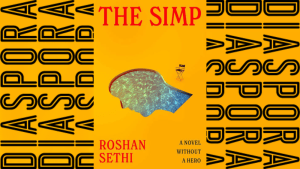

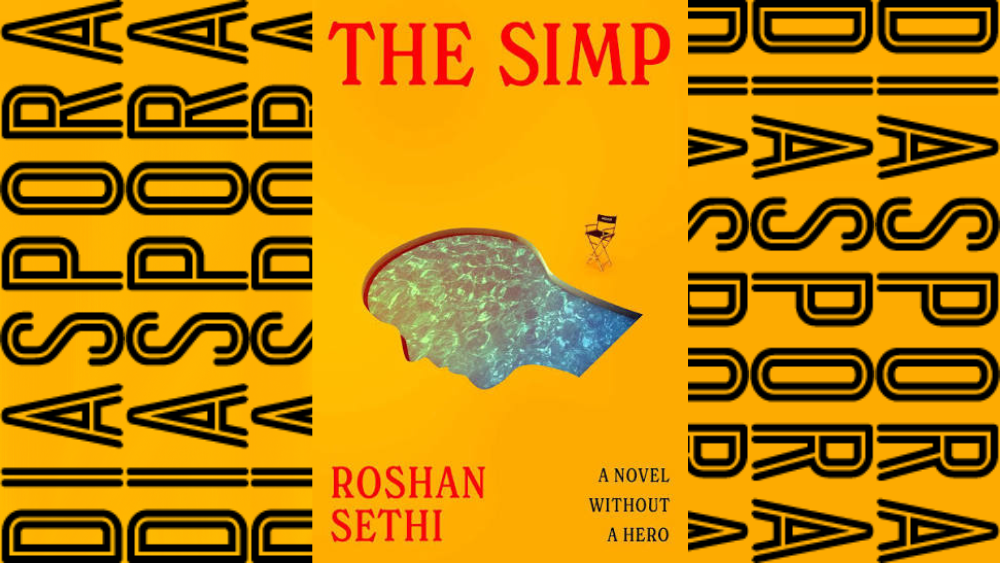
There was a cathartic validation while reading Roshan Sethi’s debut novel, The Simp, a searingly realistic tale about the absurdity of Hollywood in all its white splendor.
The Simp follows the aforementioned Raj, an unemployed actor who lands a job as an assistant to a wealthy Hollywood power couple. Raj’s proximity to a high-profile couple in the entertainment industry brings him closer to his ambitions as an actor. It’s not long before his ambition curdles into desperation, righteous vengeance, but also a stronger sense of identity outside of how others perceive him.
“The word representation was uttered so many times that Raj nearly lost track of its meaning. It became nonsensical,” writes Sethi in The Simp.
Finally, someone else besides me thinks this.
A practicing oncologist and Harvard Medical School instructor, author Sethi also co-created the series The Resident and directed the rom-com A Nice Indian Boy, which premiered at SXSW in 2025. But there’s a great appreciation for Sethi’s spot-on, fact-driven commentary he makes about the “diversity” in the film and TV industry. Specifically, he often drops huge truths about the elitism, gatekeeping, and unchecked privilege in Hollywood on his Instagram. Recently, he wrote an editorial for The Los Angeles Times titled, “Is Hollywood done catering to diverse voices?”
With a cutting pen, Sethi brings a perspective that is seldom seen when it comes to the discourse about diversity in Hollywood. It’s skeptical, but not contrarian. It brings constructive criticism not about diversity itself, but the entertainment industry’s “let’s put a Band-Aid on it” approach.
As the character of Raj points out in The Simp, representation has become a shell of itself. The battle cry “representation matters” has turned into a questioning whimper: “representation matters?”
“White audiences have stopped going to the theaters in the same numbers they used to, yet the vast majority of movies spotlight white leads despite there being no evidence that audiences prefer,” writes Sethi in the article. “In fact, for years, UCLA has published a detailed annual Diversity Report showing the opposite.”
It has been said time and time again that diverse casts lead to box office success. In UCLA’s recently released 2026 Hollywood Diversity Report, they analyzed 109 English-language theatrical releases from 2025 and found a correlation between diversity on screen and financial success. Films with “diverse” casts that included 41% to 50% people of color saw a strong performance across every single metric.
All of these ideas are packaged into Raj’s narrative and Sethi’s sharp storytelling skills. The Simp takes the all-too-familiar Hollywood story about the struggling actor and sets it against a backdrop of quantified data about Hollywood’s performative diversity practices.
The Simp is freakishly realistic when it comes to capturing the essence of the current Hollywood many live in. The book unapologetically — and delightfully skewers the film and TV industry with blunt honesty. It also gives refreshingly honest commentary about the “Golden Age of DEI” that was filled with hope, advances, fleeting victories, unavoidable setbacks, virtue signaling, and performative mindsets.
The novel calls out Hollywood’s bullshit.
Sethi puts into words how many in the film and TV industry feel but cannot quite articulate. The Simp removes the velvet ropes from Hollywood and brings readers through an insider’s perspective, exposing things the industry refuses to address or fix. With his extensive experiences in film and television, Sethi tells this story through the perspective of Raj.
There are plenty of things happening to Raj in this book, and Sethi doesn’t let him make happily-ever-after decisions. You feel every bit of his anxiety, fear, joy, and excitement. He also makes many choices that will make you cringe, but you can’t grow without a little cringe.
The Simp doesn’t hold back with Raj’s specific experience that will resonate universally. Raj contends with his big-time filmmaker boss, Jim, freely using the term “sandn****r” while his younger and condescending wife is motivated to always keep him busy. Dormant with toxicity, Raj’s relationship with his high-profile, casually racist and ignorant bosses is a microcosm of Hollywood as a whole.
Raj is struggling to impress Jim and Anna but hasn’t found the right combination of code-switching that doesn’t compromise his true self. It’s a journey that highly melanated and queer people often have to contend with — but Sethi also explores the colonizer behavior within your own community.
In one moment in the book, Raj attends a panel about representation in Hollywood. The panelists maintain an upbeat “your stories matter!” demeanor — except Devon, an enraged Indian man who sees through Hollywood’s promises of change.
When Raj approaches Devon to ask him if they could grab coffee sometime, he responds: “We don’t owe each other our time just because we’re both Indian. That’s their logic, not ours. That’s tribalism.”
Sethi punctuates that moment with: “Then Raj saw him post pictures, months later, of him posing at the very exclusive Gold Gala for successful Asians and Indians in Hollywood, which tribalism had not kept him from attending. The gala cost nearly a million dollars and was a party to celebrate representation.”
The Simp is like Devil Wears Prada but more queer, more melanated, not as white and set in the entertainment industry. As his debut novel, Sethi takes the phrase, “Write what you know,” and runs with it. He thoughtfully presents the DEI discourse as a device to create a relatable character that lives crazy, passive-aggressive experiences in the film and TV industry, where identity is part of one’s livelihood. With The Simp, Sethi manages to capture the humor and sadness that plagues an industry that could be better, but acts like everything is fine the way it is.
The Simp debuts on July 7. Buy your copy here!