
Picture it: New York City. December 4, 2024.
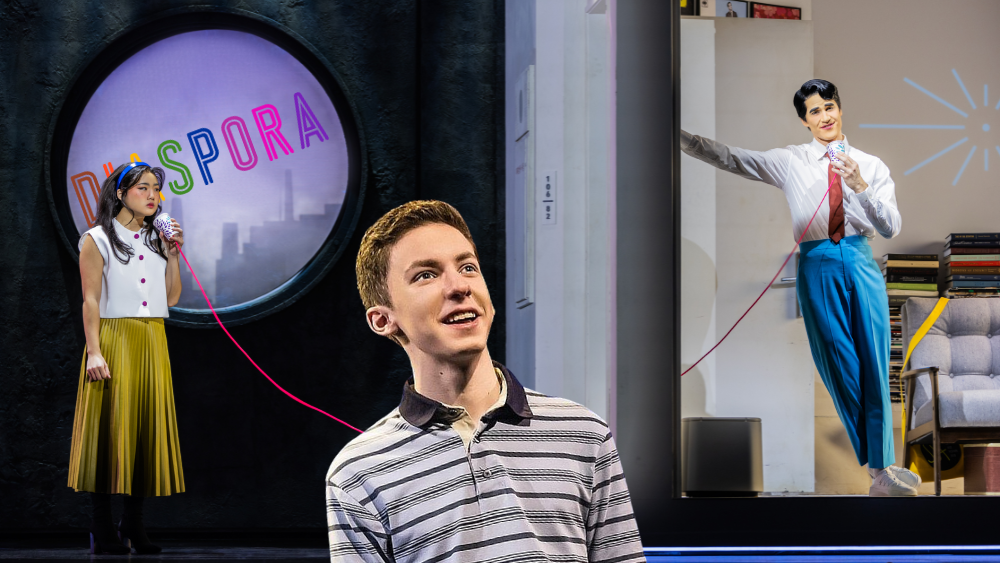
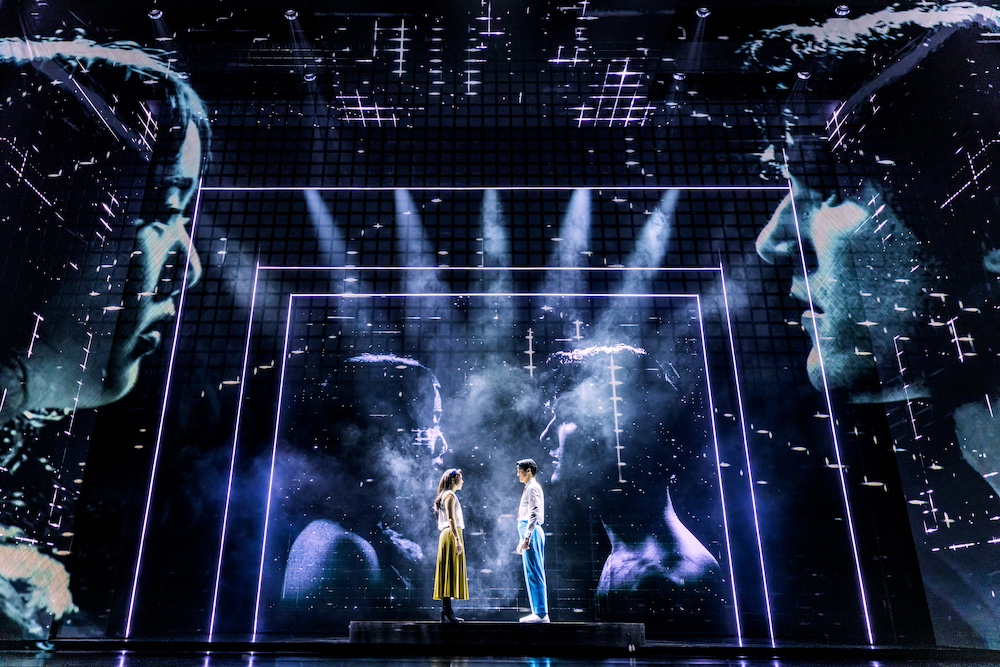
It was a chilly night. I just finished interviewing the delightfully charming Helen J. Shen hours before she was to take the stage as Claire, a free-spirited HelperBot in the musical Maybe Happy Ending. I was sitting in the audience at the Belasco Theater, waiting for the musical to start, unaware of what the future held for this musical.
Based on the original 2016 Korean-language musical by Will Aronson and Hue Park, the pair collaborated with Tony Award-winning director Michael Arden for the contemporary American version, which received 10 Tony Award nominations this year, winning six of them, including Best Musical.
Later during the show, as I sat there watching Shen sing into the eyes of her dapper love interest HelperBot Oliver played by Darren Criss with her gorgeous, crystalline voice, I would never imagine that I would be sitting here in August of 2025 asking myself: “Do I really have to write commentary about why they picked a white boy to replace Criss while he goes on hiatus? And why was the creators’ statement on social media about their decision hella long?”
And finally, “Why are we still doing this?”
Listen. I am tired of having this conversation, but someone opened this can of worms and now it’s in by the time this goes up I am hoping it will be in the final stages of its media cycle.
Maybe Happy Ending is inherently Asian — Korean to be specific. Period. I’m going to agree with the masses and say that casting Andrew Barth Feldman in Criss’s role is a bad move. The casting makes zero sense considering the culturally Asian makeup of the narrative. Even so, the creators of this musical can do whatever the hell they want even if the choice is inane. It’s their journey. But when I found out he was dating Shen, I threw my hands and I said, “GODDAMMT! NOW WHY DID THIS NARRATIVE HAVE TO GO AND DO THAT?!”
Aronson and Park’s statement feels like a long-winded way of saying “yeah, we know we did something questionable.” Shen also took to Instagram to say a few words about the whole ordeal and was as diplomatic as she could be about it. Kudos to her for being open to talking about it. No word from that Feldman fella yet.
“I’ve been struggling to hold multiple truths within me that seem to contradict, “ said Shen in her statement. “I think that is an objectively hard thing to do, but I do think we’re called to do that in this moment.” She goes on to support the show while also acknowledging the pain and struggle of the AAPI community.
Of course everyone had a statement locked and loaded because they had to know this was going to cause an uproar — especially within the AAPI community. For the past two decades, the AAPI has seen an uptick in representation in entertainment media. From Better Luck Tomorrow to The Debut to All American Girl to Crazy Rich Asians to Fresh Off the Boat to Beef to Fire Island to Ms. Marvel to Deli Boys to Moana, AAPI representation has been thriving… but post-pandemic, post-racial reckoning, post-strikes, post-2024 election, post L.A. fires-Hollywood hasn’t been the kindest.
Considering the unstable landscape of the entertainment industry and the world in general, the casting of Feldman in a role that could have been given to an AAPI actor is giving a microcosm of MAGA energy.
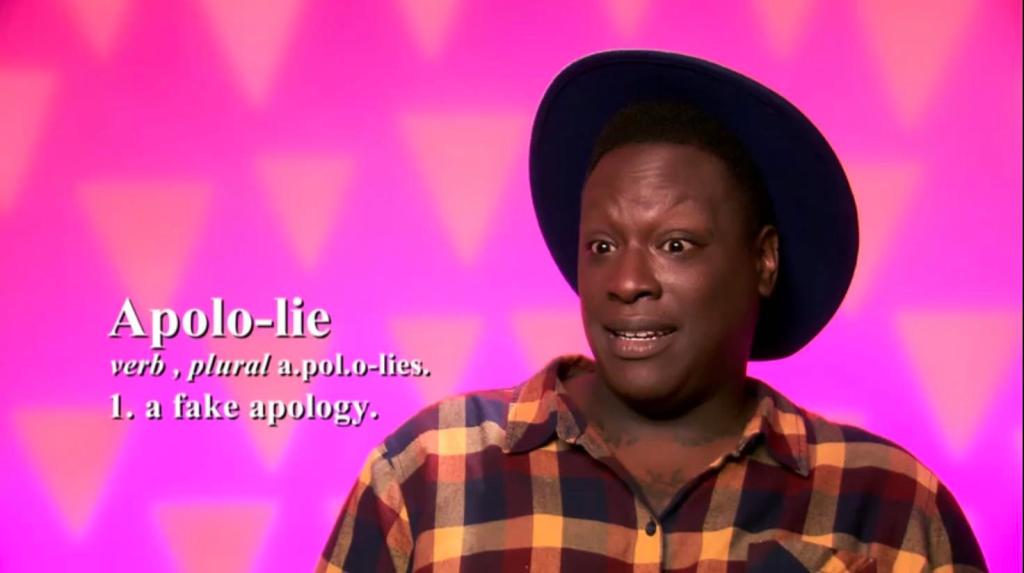
It’s just not a good look, and I’m tired… and I’m sure a lot of other people are too. But what can we say? The damage is done. As iconic Asian American actor of stage, TV, and film BD Wong said in his well-written essay on Facebook, “Team [Maybe Happy Ending] does what it thinks it must…. Yet, this decision’s still taken as a hard slap in the face of both the Asian actor community and the Asian audience.” Especially in a time when out-of-work AAPI actors are wandering in a entertainment industry desert during a drought of work. No apo-lo-lie is gonna make anything better, unfortunately.
Even though there were plenty of Asian nuances and the entire cast on stage was of Asian descent, I did not think to myself: “This is an Asian musical!” while watching Maybe Happy Ending. I was very pleased to know that Criss, Helen J. Shen, Dez Duron, Marcus Choi, Young Mazino, Arden Cho, and even the plant, HwaBoon, were working and doing their thing. The appeal of Maybe Happy Ending was its scrappiness. It was the “indie”, buzzy, word-of-mouth musical that you were cool for watching before anyone else. The fact that it was organically Asian was a bonus.
And now, here we are. What was once a beacon of coolness is now a minefield of identity politics. The artistic integrity of this musical has been compromised because of one singular decision. The sad thing I will say is: Will things actually change?
“As I write this, it’s as if no time has passed; as if nothing’s changed, “ Wong wrote in his essay. “As if no one learned anything from that racial dismissal and exclusion 35 years ago, as we now stand up to face this racial dismissal and exclusion.”
He went on to say, “If anything’s different in 2025 than in 1990, it’s that this community is now painfully aware it deserves, at the very least, respect from this industry. We’re constantly fighting like hell for that respect, as we did thirty-five years ago. This time, we have the evolved, unmitigated gall to know that we’ve got a point. We’re rabidly annoyed.”
Aronson and Park said that their decision was based on “thoughtful deliberations”.
“We are proud to have created a show where every role can authentically be portrayed by an Asian actor, although the roles of the robots were not envisioned to always be cast that way,” the pair continued to say in their statement. “We also appreciate that, for many within the AAPI community, seeing the original Broadway cast represented an inspiring milestone of visibility and representation.”
When they said, “although the roles of the robots were not envisioned to always be cast that way,” I immediately thought, “Then why not cast a Black, Latino, or Indigenous actor?” Come to think of it, it would be amazing to have other POC actors in the roles.
There’s no mincing words: an AAPI actor was robbed of a gig. End of story. The reason? At this point, who cares? Let’s chalk it up to colonialism and keep it pushing. They made an ignorant choice and now they are paying for it… but not really.
BD Wong said he was having this same conversation 35 years ago. And he ain’t wrong. How many times has this happened? I have said the words “We have come a long way but we have so far to go” so many times that it has become a joke.
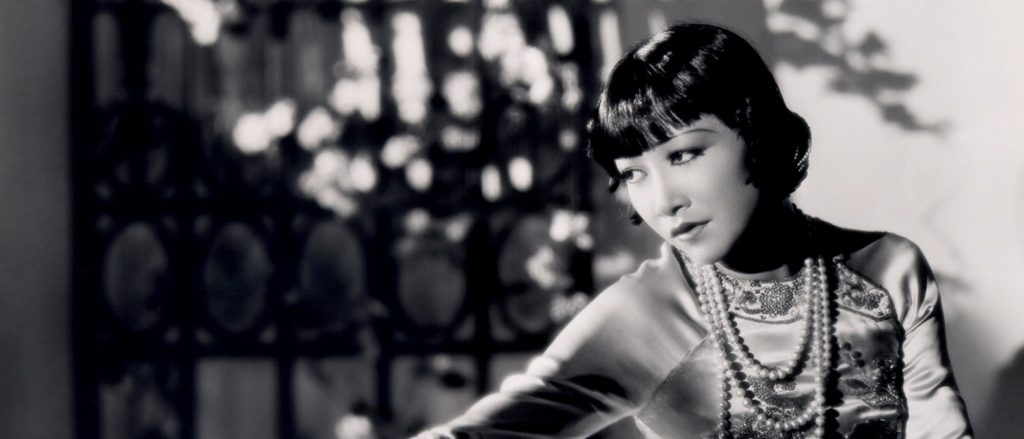
This type of casting can go back to 1937 when trailblazing Asian American actress Anna May Wong auditioned for a Chinese character named O-Lan in the filmThe Good Earth, only to lose the role to a white woman named Luise Rainer, who taped her eyes to appear “more asian”. She won an Oscar for her performance. To add to that, Katherine Hepburn played Asian in 1944’s Dragon Seed, and who could forget Mickey Rooney as Mr. Yunioshi in 1961’s Breakfast at Tiffany’s. Fisher Stevens totally did brown face in Short Circuit in 1986, while we just passively let Hank Azaria voice the South Asian character of Apu on The Simpsons for decades, which prompted comedian Hari Kondabolu to do the documentary The Problem with Apu in 2017. Then there was the Golden Age of Yellowface casting, which included Emma Stone in Aloha (2015), Matt Damon in The Great Wall (2016), and Scarlett Johansson in Ghost in the Shell (2017).
Specifically, Broadway has a storied history of whitewashing of Asian roles. From Yul Brynner starring as the The King of Siam in the 1951 production of The King and I to Jonathan Pryce as The Engineer in Miss Saigon in 1990, yellowface/brownface was commonplace in Broadway and everyone was fine with it!
All these examples are barely scratching the surface. There are plenty of receipts. You could see why the AAPI community would be pissed off. The sad thing is, the AAPI community will likely be the only community experience any reverberations from any this.
Is anyone even listening? Does anyone even give a fuck? Because based on the history it sure as hell feels like no one does.
This controversy will have little impact on ticket sales of the musical. Maybe Happy Ending will continue to do well because the average New York City tourist and/or Broadway fan isn’t concerned with the identity politics of it all. They just want to be entertained.
So what can be done to combat this kind of colonizer nonsense? Conrad Ricamora, who recently ended his run on the Tony Award-winning Oh, Mary!, has the right idea because the industry doesn’t seem to be doing anything about it.
When the powers that be are failing the underserved, the community being impacted must, as Hamilton tells us, “rise up”. We are the only ones that can help us because the ones that are in charge sure as hell aren’t gonna help us.
When he caught word of the Maybe Happy Ending casting news, he started a scholarship fund called “The Right to Be There” for Asian American men pursuing an acting degree instead of dwelling on the ignorance of it all.

“Progress in our industry can be real and inspiring—but it’s often fragile,” he wrote on the scholarship fund’s GoFundMe Page. “Even after decades of work and some recent wins, Asian American men still face enormous barriers in the world of acting—especially in roles that are complex, leading, and human. And especially on stage.”
This casting fiasco has put the actors in a peculiar position — and it’s no fault of theirs. They just want to perform their art. Now each member of the cast has the extra responsibility of fielding questions and comments about a decision they didn’t make — at least through the beginning of Feldman’s nine-week run. Hopefully, the hoopla will calm down sooner rather than later.
That’s the main problem: the people making decisions don’t think about the people who it’s going to impact the most. The performers. The storytellers. The audience. The culture it represents. The time in which the story is being told. There’s a bigger narrative here. Shit’s bleak. The AAPI community saw themself in something, and it was celebrated and then it was taken away from them. Afterwards, the response was: “Actually, it wasn’t really for you in the first place.”
But I get it: Feldman is an experienced actor who has instant chemistry with the lead. He is a Broadway draw and can just dive right in with no training wheels. He is the practical choice… but that practical choice essentially said “fuck you” to an entire community.
We’re going to continue to have the same conversation for the next 35 years until decision makers to do better… a lot better. The complacency is deafening. Because, girl, we are tired.
I am a queer Asian American living in the United States of America in a time when this country — hell, the entire world — is less-than-desirable when it comes to the landscape of humanity. Each day, more rights from the most vulnerable communities are being threatened by a presidential administration that thrives at the festering intersection of ignorance and abuse of power. Anyone with a modicum of common sense knows which side of history to stand on. It’s a given. At the same time, it feels absurd that we have to tell people, “Hey, did you realize that you’re doing something that’s not good for the people at this moment in time?”
I have been writing about diversity, representation, inclusion, and whatever else you want to call it as long as I can remember. It wasn’t until I was at Deadline when one of my editors told the entire staff during a meeting, “If you have any questions about diversity, ask Dino,” that I became hyper aware of how my identity could be tokenized by a colonizer, putting the responsibility of diversity on my shoulders when it shouldn’t. Colonizers come in all colors — even my own. And colonizers should be the ones who should fix it, not the parties being impacted.
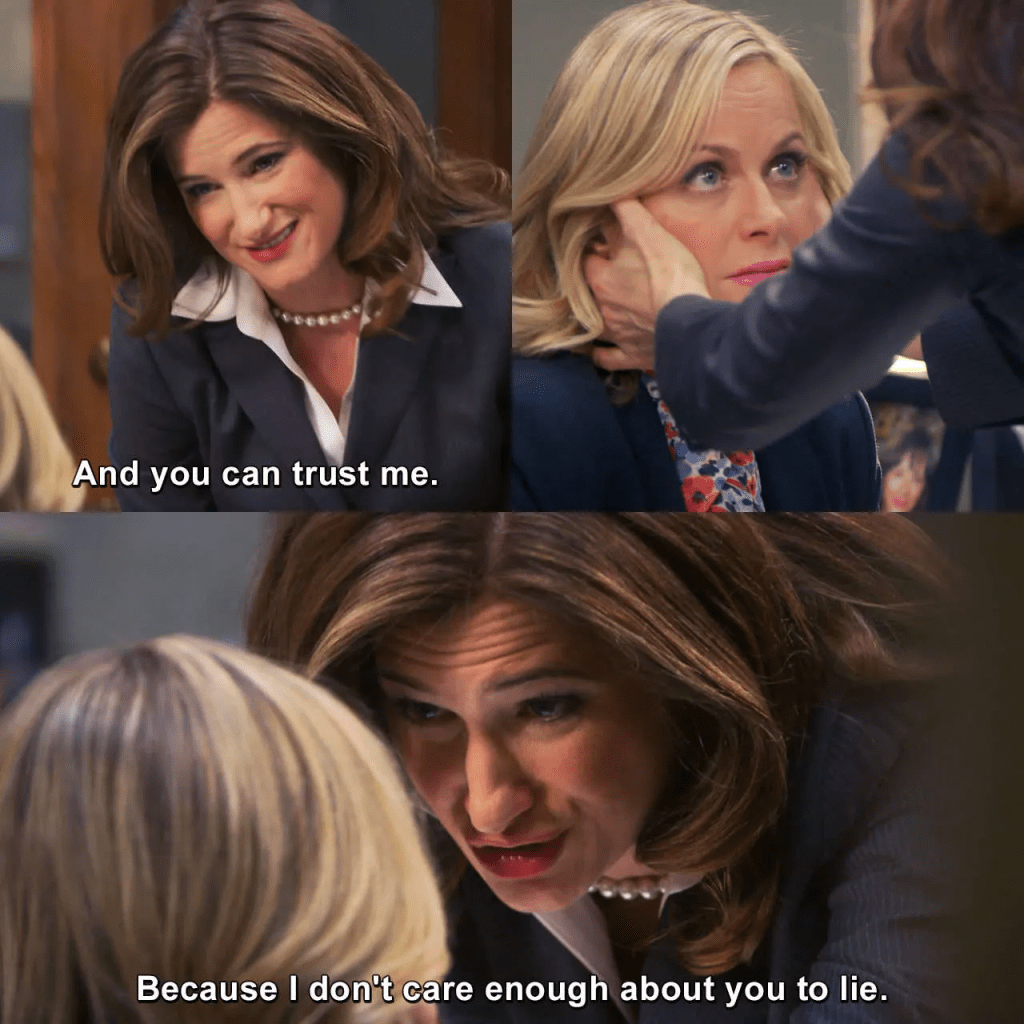
I wasn’t going to write anything about this Maybe Happy Ending news because why add to the chorus? But after talking to some folks, I decided to, because why the hell not? Over the years, I’ve learned to take on this advocacy work as if I were political mastermind Jen Barkley in Parks and Recreation, played by the wonderful Kathryn Hahn. I care enough about the whole situation, but not enough to be biased and lie to the masses.
At the end of the day, none of this has anything to do with how I live my everyday life. I just want to mind my own business, pay my rent, and have a good time.
I have grown to hate the phrase “representation matters” because the entertainment construct has colonized it. Clearly, it doesn’t. Otherwise, we wouldn’t be having this conversation.