
THANK YOU FOR READING! This article was originally released via the DIASPORA Substack. Please consider becoming a DIASPORA member to support me and my work! You’ll receive EXCLUSIVE access to ALL THE THINGS: articles, interviews, essays, podcasts, full archive of articles, and commenting.
This work takes time, care, and independence — and your support makes it possible. If my writing has ever informed, inspired, or provoked thought, consider becoming a paid subscriber. You’ll get exclusive updates, new multimedia ventures, and direct insight into how this newsroom and media organization comes to life!
As long as Kiss of the Spider Woman has been around, my knowledge about the text is very limited. All I know is that Chita Rivera originated the role of the titular character in the musical adaptation on Broadway, and I randomly know that Vanessa Williams also took on the role in the ‘90s.
El beso de la mujer araña, as it is originally known, started off as a novel by Argentine author Manuel Puig that was published in 1976.
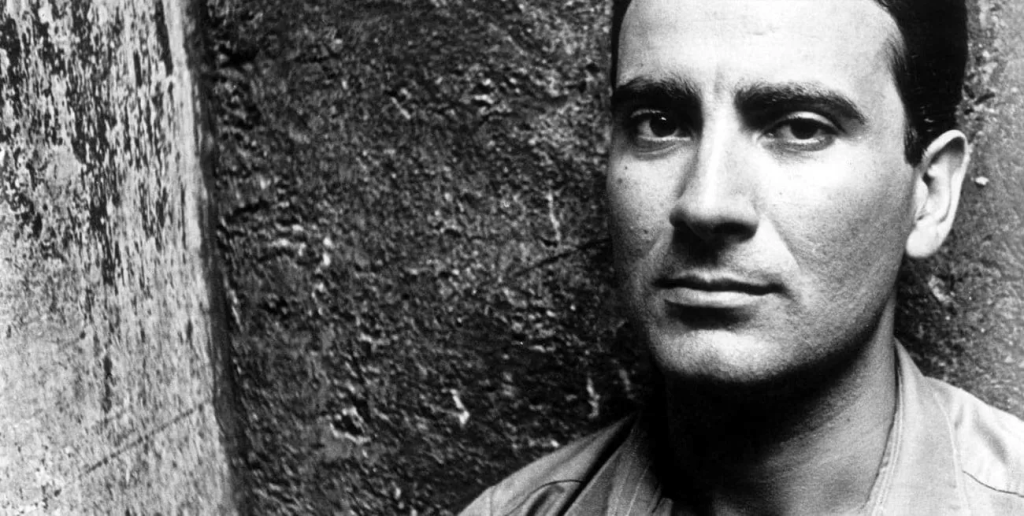
Manuel Puig, author of ‘El beso de la mujer araña’
Written by Puig while in exile, the story follows Molina, a queer window dresser convicted of “public indecency,” as he shares a cell with a political prisoner named Valentín. Molina tells stories about the films that star his favorite Hollywood diva, Aurora, aka Spider Woman, and caters them to his perspective. From this, the two form an unlikely bond as they try to escape their not-so-happy circumstances.
The story digs deep into one primary theme that rings true today and will forever be timeless: political repression, specifically under an Argentinian dictatorship.
But you wouldn’t think this was the plot of the story by seeing stills and posters promoting Bill Condon’s adaptation. Some of them look like Jennifer Lopez is promoting her one-woman cabaret show at the local community theater.

Kiss of the Spider Woman may be associated with the vibrancy and spectacle of a Busby Berkeley musical, but it’s a story of revolution, which was adapted into a play by Puig in 1983. The play was translated into English by Allan Baker and premiered in 1985 at London’s Bush Theatre with Simon Callow as Molina and Mark Rylance as Valentin.
A totally different creature from the musical, the stage play told the story through a different lens, with a heavy focus on the political, psychological, and emotional connection between Molina and Valentin. However, it still keeps its finger on the thematic element of fantastical escapism from reality — just not with jazz hands.
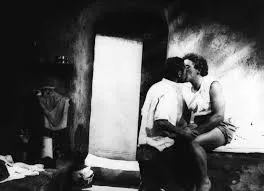
Simon Callow as Molina and Mark Rylance as Valentin share a “kiss” in the 1985 English-language stage play production of ‘Kiss of the Spider Woman’
The heavy thematic elements carry over to the 1985 film adaptation directed by Héctor Babenco. With a screenplay by Leonard Schrader, the iteration also leaned heavily on the novel with William Hurt as Molina and Raúl Julia as Valentin, and Sônia Braga as the divalicious Spider Woman.
Babenco’s noir-style interpretation of Kiss of the Spider Woman upped the ante when it came to repression and continued to navigate Molina’s fantasies as coping mechanisms for their bummer of a reality.
The film was lauded and received four Academy Award nominations, including Best Picture, Best Director, Best Adapted Screenplay, and Best Actor for William Hurt, which he won. Raul Julia or Sônia Braga, two actors from the diaspora that the movie represents, received Golden Globe noms but no Academy Award love. It seems about right for 1985.
By 1992, it seems that it was time to make it less doom and gloom and more “BROOOOOADDWAAAAY!”. The novel was adapted into a whole-ass musical with music by John Kander, lyrics by Fred Ebb, and book by Terrence McNally.
The musical production kicked off in Toronto in 1992 before migrating to the West End. In 1993, Kiss of the Spider Woman made its premiere on Broadway with the original cast featuring Chita Rivera as the Spider Woman, Brent Carver as Molina, and Anthony Crivello rounding out the cast as Valentin. The musical was a critical success and went on to win multiple Tony Awards, including acting awards for the leads as well as Best Musical.
The Broadway curtain closed on Kiss of the Spider Woman in 1995, and it had multiple touring productions. The musical remained an integral part of Broadway history, but never had its own film adaptation until the independent financing fairies came down from heaven and decided to make a movie musical with Condon in the director’s chair, Tonatiuh as Molina, Diego Luna as Valentin, and J. Lo spinning her web as Aurora.
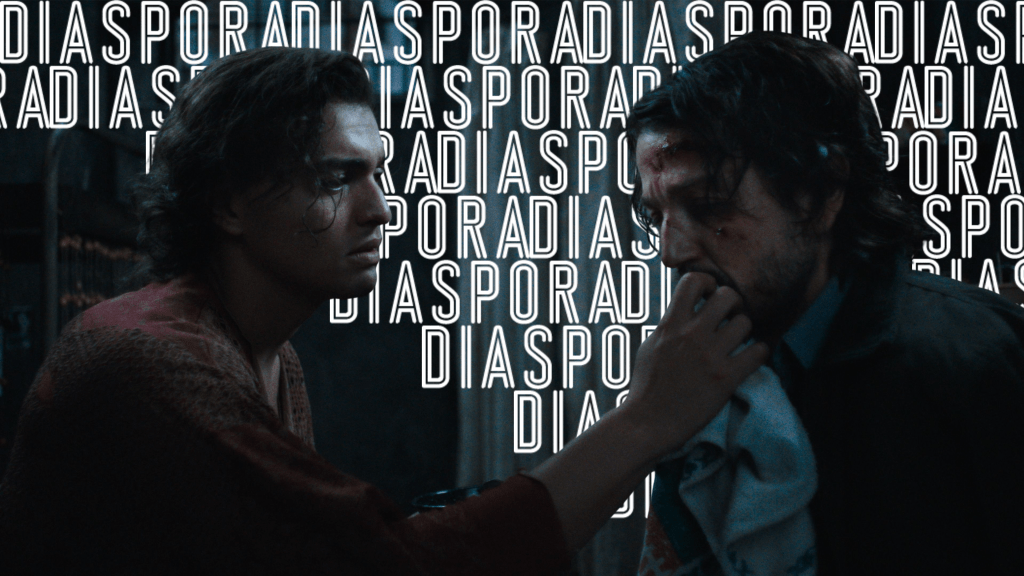
Condon’s iteration honors the spirit of the book, attempts to fold in a hearty amount of political and psychological tension as in the play, and all the while, gives us the full candy-coated Technicolor fantasy.
The Kiss of the Spider Woman of 2025 is less of a story about revolution and more about trying to pay homage to the book, the play, and the musical simultaneously. As a result, you feel the labor going into this film in order to achieve this, making it feel as such: labored.
Kiss of the Spider Woman feels overworked because it’s ambitious. The source material is tackling a shitload of themes while trying to give us a full-blown, old Hollywood cinematic fantasy. How in the hell are you supposed to balance those things on screen and make it feel effortless? Condon tries and doesn’t fail. The film just falls short of becoming an iconic piece of movie musical cinema — but could very well be a staple in queer cinema discourse.
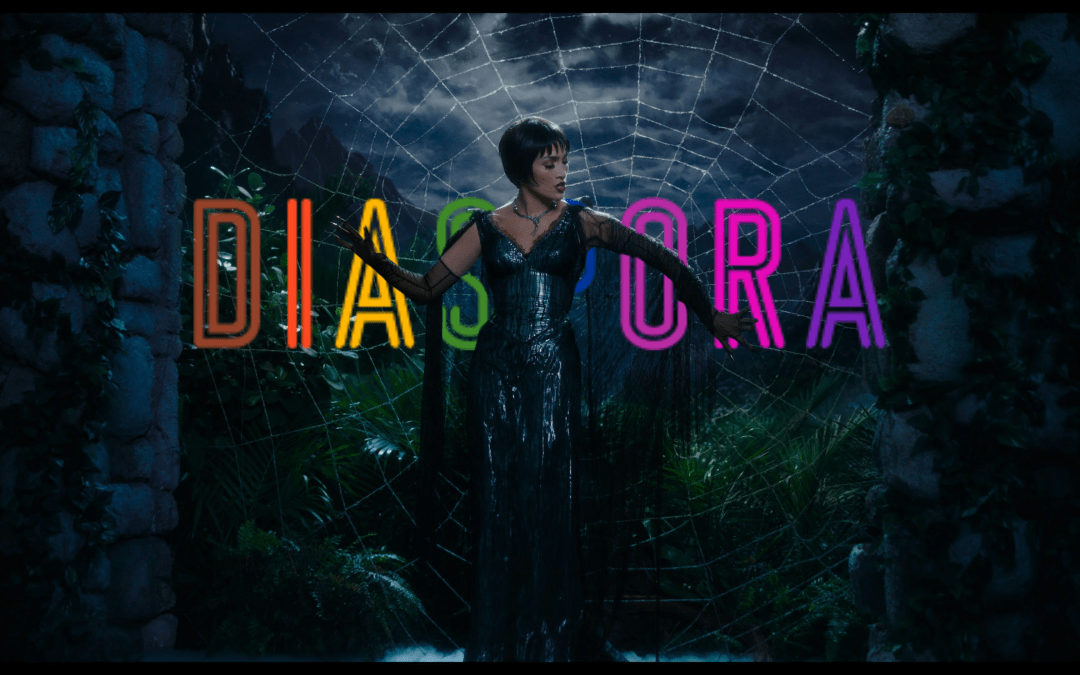
Flawlessly artificial and saturated with color on purpose to serve as an aggressive contrast to the gloom-cloaked prison cell from which imprisoned Molina (Tonatiuh) tells vibrant stories of Aurora (J. Lo) to his reluctant cellmate Valentin (Diego Luna)
Overall, the performances are electric with Tonatiuh being the breakout star of the film with Luna as his hype man. Tonatiuh soars as Molina, embracing the role with care and with an unbelievable amount of empathy. From his moments in his cell bickering with Luna to the tender moments he has with himself to the dapper and debonair Latino Cary Grant energy he gives in the cinema fantasies to the unabashed celebration of queerness he brings to the screen, theVida alum made each second of his time in Molina’s skin count.

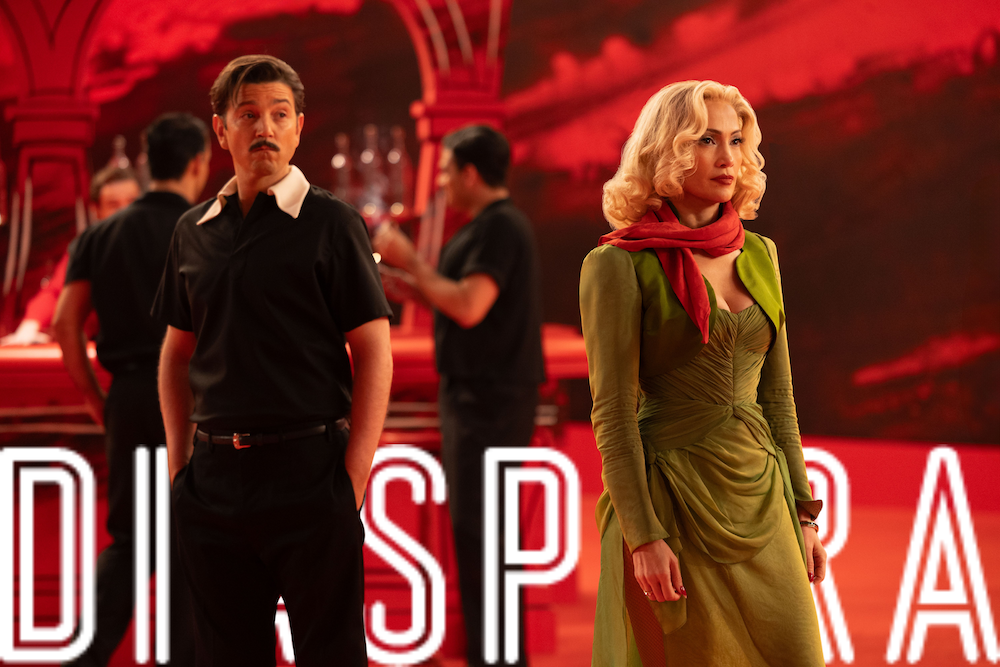
The movie musical is refreshing in that all three roles are played by actors of Latino descent, as opposed to past casts which have been majority white. This alters the dynamic and narrative energy of the source material, further demonstrating that representation does indeed matter.
Amidst the flourishing performance of Tonatiuh, Luna contributes his acting gravitas to the mix making them a good pair on screen. As for J. Lo… J. Lo is J. Lo’ing.
At this point in her career, Lopez has reached a level where she can get away with phoning in a performance; however, she usually doesn’t. She is of that status. Let’s not forget her “This is Me… Now” era, which included a whole-ass head-scratcher of a movie, a documentary titled The Greatest Love Story Never Told (which left many of her fellow Latinx folks questioning her authenticity), and a tour that never quite got off the ground — but she is still Jennifer mother fuckin’ Lopez. You can’t take that from her. (C’mon On the 6th!)
As Aurora, she’s not necessarily phoning her performance in, but she is delivering a strong Zoom call of a performance. There’s not one particular J. Lo moment in Kiss of the Spider Woman that will go down in the annals of cinematic history as an iconic moment in film. She delivers fierce lewks that don’t quite match up with her performance all the time.
But with Tonatiuh, he gives that Hollywood movie musical charm. There’s a glint in his eye as he looks longingly into the fantastical moonlight and takes solace in the movies starring Aurora that play in his mind.
It’s giving Irene Cara singing “On My Own” in Fame.
Condon follows a similar formula that Rob Marshall used in Chicago (2002), where Roxie Hart (Renée Zellweger) plays out her musical fantasies while in prison, but the difference is that Kiss of the Spider Woman is couched through a revolutionary lens that peeks through the oversaturated Technicolor curtains of the film.
Kiss of the Spider Woman comes out at the perfect time when it feels like everyone in this country feels like a political prisoner no matter what side of the fence they’re on — which is why we are met with an overwhelming amount of divisiveness, lack of civility, hostile overreaction to every piece news coming out of the media machine, and the inability to listen and process. Unfortunately, Kiss of the Spider Woman isn’t necessarily concerned with this. I feel like it wants to be, but it’s just not bold enough to go there.
All comes to a head at the end of the film, when a non-resolution resolution is cobbled together for Molina, softening the blow on dated queer tropes. There is a modicum of justice felt in the film, but me thinks that a substantial amount of Molina’s narrative and political heft of the film was left on the cutting floor to fit in more flashiness.
There’s no denying that Kiss of the Spider Woman is a spectacle of movie musical magic. Condon has that covered. We know he can make a film look good. He’s done it before with Dreamgirls, Kinsey, and Gods and Monsters. Hell, he’s done it with the seminal, two-part Twilight: Breaking Dawn finale. Style-wise, he slays. Unfortunately, the substance was not confident enough to hold up to the vision. Kiss of the Spider Woman had the opportunity to send a message of revolution and mobilize, but instead, it feels more concerned with looking good.
Support independent media that amplifies unheard voices. By becoming a paid subscriber, you’re not just funding a newsletter — you’re investing in stories that challenge power, celebrate culture, and reimagine who gets to tell the truth. Join a community of readers who believe media should serve people, not corporations.